

Renovate or Sell As-Is: Portland Home Tips
Home Renovation, Portland Real Estate, Home Selling Tips, Property Value
Should I Renovate My Portland, OR Home Before Selling or Sell As‑Is?
Deciding whether to invest in home renovation or list your Portland property as‑is is one of the biggest choices you’ll make when selling. With a stabilizing but still competitive Portland real estate market, the right strategy can mean tens of thousands of dollars in your pocket—or months of unnecessary stress.
Start With the Portland Market You’re Selling Into
Before you pick up a paintbrush or call a contractor, it helps to understand the current backdrop for Portland real estate. As of mid‑2026, most data sources place the city’s median sale price somewhere between about $512,000 and $565,000, depending on the neighborhood and property type (Property Max, Redfin via GetLokal). Homes are typically going under contract in a few weeks, with roughly three months of inventory on the market—conditions that signal a balanced market rather than the frenzied bidding wars of a few years ago.
At the same time, buyers have regained some leverage. Realtor.com reports that nearly a quarter of listings see price cuts, and Redfin has tracked typical discounts off list price in recent years. In other words, today’s buyers are value‑conscious and more willing to negotiate—especially if a home shows obvious deferred maintenance or outdated finishes. That reality makes your renovate‑versus‑as‑is decision especially important for protecting your property value.
The Core Question: Renovate or Sell As‑Is?
There’s no one‑size‑fits‑all answer, but you can think of the decision in three parts:
Safety and functionality: Are there issues that could scare off buyers or trigger inspection problems?
Cosmetic appeal: How does your home stack up visually against similar listings in your neighborhood?
Return on investment (ROI): Will a given home renovation project realistically increase your net proceeds after costs?
In Portland, where median values hover in the low‑ to mid‑$500,000s and affordability is still a challenge for many buyers, people are drawn to homes that feel move‑in ready but not over‑the‑top. That’s why targeted, practical upgrades often beat full gut remodels when you’re selling.
What the Numbers Say About Home Renovation ROI in Portland
National “Cost vs. Value” reports have shown for years that small, exterior‑focused projects tend to deliver the best financial returns. In 2026, items like garage door replacement and manufactured stone veneer top the charts, with ROI well above 100% nationally (HomeCostLab). Portland, part of the Pacific region, actually outperforms those averages.
Recent regional and Portland‑specific data show approximate returns like:
Garage door replacement: 180–268% ROI in the Pacific region—spend around $4,900 and add roughly $8,800 or more in value (HC Design Build).
Steel entry door: Around 144–216% ROI, depending on the report—an outsized impact for a relatively small spend.
Manufactured stone veneer: 153–167% ROI, largely driven by curb appeal.
Minor kitchen remodel (midrange): Roughly 96–123% ROI, with Portland trending toward the higher end of that range.
Mid‑range bath refresh: Typically 70–77% ROI—solid, but not a total game‑changer on its own.
By contrast, whole‑home renovations in Portland can easily run $200,000–$400,000 or more, and often recoup only around half of that at resale. If you’re selling soon, that kind of large‑scale home renovation rarely makes sense purely as a financial play.
💡 Key Insight: In the current Portland real estate market, strategic, mid‑range updates usually boost property value more efficiently than major luxury overhauls.
When It Makes Sense to Renovate Before Selling
Renovating before you list can be a smart move when you’re addressing the kinds of issues that Portland buyers notice immediately—and are willing to pay for. Consider investing in updates if:
Your home has clear deferred maintenance—peeling paint, damaged siding, an aging roof, or a garage door that has seen better days. In a rainy climate, buyers are very sensitive to moisture and exterior condition.
The kitchen or baths are functionally fine but visually dated (think oak cabinets, busy tile, or worn laminate). A minor kitchen remodel—painting cabinets, replacing counters with a durable neutral, swapping out hardware and lighting—can dramatically improve first impressions without a full tear‑out.
You’re in a high‑demand neighborhood where renovated homes are clearly commanding a premium. If nearby listings in SE Portland or inner NE, for example, are selling quickly after light updates, a few targeted projects may help your home compete head‑to‑head.
You have time and cash available, and your agent’s pricing analysis shows a likely bump in net proceeds after renovation costs.
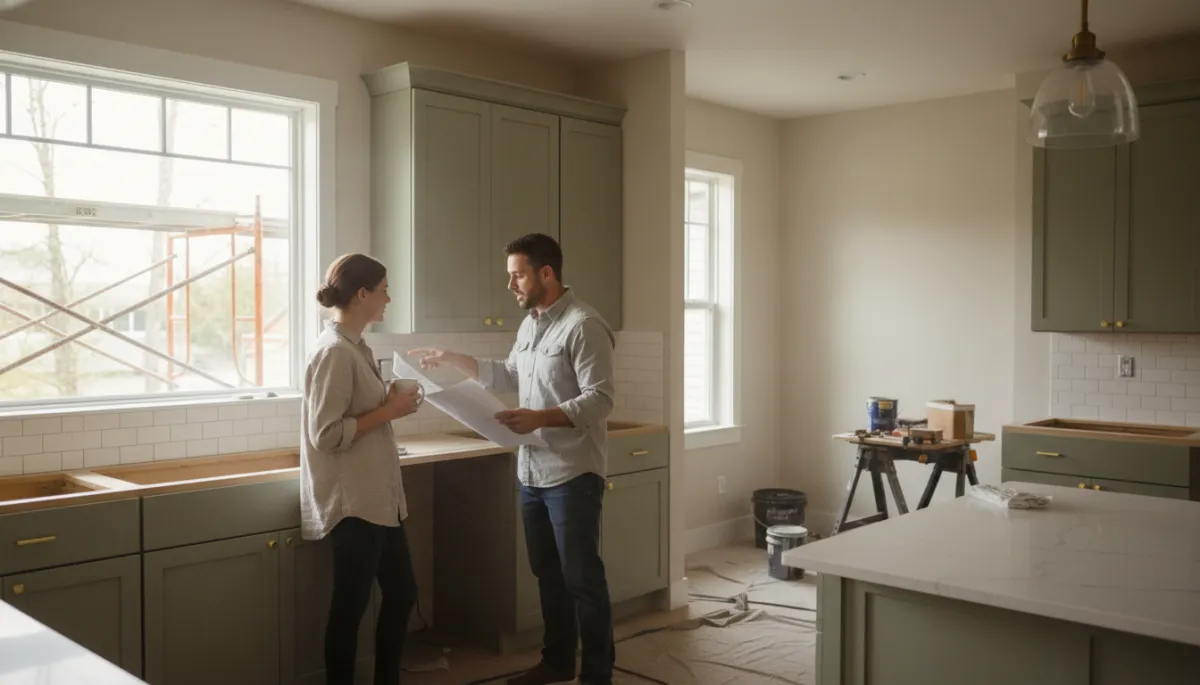
Modest kitchen refreshes often recoup their cost and help homes sell faster in Portland.
When Selling As‑Is Is the Better Move
On the other hand, there are plenty of situations where selling as‑is is more realistic—and more profitable in the long run. You might lean toward an as‑is sale if:
The home needs major systems work—foundation repair, extensive electrical rewiring, or full plumbing replacement—and you don’t have the budget or appetite for a large project. Investors and experienced buyers will factor these costs into their offers, but you’ll avoid the risk and stress of construction.
You’re dealing with a time‑sensitive sale, such as a job relocation, estate settlement, or financial hardship. In that scenario, speed and certainty may matter more than squeezing out every last dollar of property value through renovation.
Your home is in a high‑end segment of the market—where buyers are likely to gut and customize anyway. In those price ranges, a brand‑new but generic kitchen might actually be seen as something to rip out, not a selling point.
You’re overwhelmed by the idea of managing contractors, permits, and design decisions. For many sellers, the emotional cost of a big home renovation is just as real as the financial one.
📌 Key Takeaway: If a project won’t clearly raise your net proceeds—or you can’t realistically complete it before your ideal move date—selling as‑is can be the smarter, lower‑stress option.
High‑Impact, Low‑Stress Updates Almost Every Seller Should Consider
Even if you decide against a full renovation, a handful of focused projects can dramatically improve how buyers perceive your home—and help you stand out in Portland’s value‑conscious market. Think of these as “no‑brainer” home selling tips that usually offer strong bang for your buck:
Curb appeal tune‑up: Fresh mulch, trimmed shrubs, a pressure‑washed walkway, and a new or freshly painted front door can make buyers feel confident before they even step inside—especially important in gray Northwest light.
Neutral interior paint: A consistent, light neutral throughout helps spaces feel larger and move‑in ready. It also photographs well for online listings, where most Portland buyers start their search.
Lighting and hardware: Swapping dated brass fixtures for simple black or brushed nickel, and adding brighter, warmer bulbs, can modernize a room in an afternoon without a major investment.
Flooring refresh: Replacing worn carpet or refinishing tired hardwoods is often cheaper than a full remodel and has an outsized impact on perceived cleanliness and quality.
Energy‑efficient touches: In Portland’s eco‑minded culture, simple upgrades like a programmable thermostat, efficient lighting, or well‑sealed windows can be a quiet but meaningful selling point.
A Simple Framework to Decide What’s Right for Your Home
To bring it all together, walk through this three‑step framework with your agent or a trusted advisor:
Assess current value and competition. Use recent Portland real estate sales—ideally within a mile or two of your home—to estimate your as‑is value. Look closely at listing photos: how do those homes compare in condition and style?
Price out realistic projects. Get ballpark estimates for a handful of high‑ROI updates: exterior tune‑ups, a minor kitchen refresh, a bath update, or new flooring. Ask your agent how each project might change your likely list price and buyer interest.
Compare net outcomes and timelines. For each scenario (as‑is, light refresh, larger renovation), subtract estimated costs, then factor in your ideal move date and tolerance for disruption. The best path is usually the one that balances higher property value with your real‑world constraints.
Final Thoughts: Make the Market Work for You
In a stabilizing market where Portland homes typically sell in a few weeks and buyers are watching every dollar, the question isn’t simply, “Should I renovate or sell as‑is?” It’s, “Which specific updates will meaningfully improve my net proceeds—and which will just add stress?”
For many homeowners, the sweet spot lies between the two extremes: skip the massive remodel, but don’t ignore obvious fixes and high‑impact cosmetic updates. Thoughtful, mid‑range home renovation projects—especially on the exterior, in the kitchen, and in the main bath—tend to offer the best blend of stronger property value, smoother buyer negotiations, and a faster, less‑stressful sale.
Ultimately, the right choice depends on your home’s condition, your neighborhood, and your personal goals. With clear numbers, realistic expectations, and a few smart home selling tips tailored to the Portland real estate landscape, you can choose a path—renovate, sell as‑is, or land somewhere in between—that truly works for you.