

Is Moving to Portland, OR a Good Idea in 2026?
Portland Relocation, Moving To Portland, Portland Living Review
Is Moving to Portland, OR a Good Idea This Year? An Honest Local Review
Thinking about Portland relocation in 2026? You’re not alone. The Rose City still attracts people with its trees, trails, and coffee shops—but headlines about cost, safety, and politics can make deciding to move here feel complicated. This Portland living review breaks down the real Portland lifestyle, the current cost of living in Portland, and clear Portland pros and cons so you can decide if moving to Portland is truly a good idea for you this year.
Considering a Move to Portland, Oregon?
A local-style look at lifestyle, costs, and tradeoffs in 2026
So… Is Moving to Portland a Good Idea This Year?
The honest answer: it depends what you’re looking for—and what you’re willing to trade for it. As of mid‑2026, Portland is a city in the middle of a reset. The worst of the pandemic-era disruptions and protests are behind it, downtown is slowly rebuilding its energy, and the city is investing heavily in public safety, housing, and cleaner streets through initiatives like Mayor Keith Wilson’s “Portland’s Promise” agenda and new city‑manager form of government.
At the same time, the cost of living in Portland remains above the U.S. average, housing dominates most budgets, and issues like homelessness and gray, rainy winters are still very real. If you want walkable neighborhoods, access to nature, a progressive culture, and a strong food and coffee scene—and you can handle some messiness and higher costs—moving to Portland can absolutely be a good idea this year. If you’re seeking low costs, endless sunshine, or a perfectly polished city, you may find better fits elsewhere.
📌 Key Takeaway: Portland relocation in 2026 makes the most sense for people who value lifestyle and access to nature over rock‑bottom living costs and predictability.
Portland Lifestyle in 2026: How People Actually Live Here
Any Portland living review has to start with lifestyle, because that’s what draws most people here. Portland in 2026 leans hard into intentional, health‑conscious, outdoorsy living.
Wellness and longevity: From yoga studios and bike commuting to more advanced longevity clinics offering personalized wellness plans, peptide therapy, and NAD+ treatments, Portlanders treat health as a long‑term project, not just a New Year’s resolution. City programs like CityStrong even bring wellness and mental‑health support to municipal employees.
Design and home life: Interiors trend toward warm, natural materials—wood, stone, plants, soft lighting—which pair well with the city’s gray skies. Many residents lean into the cozy, “stay in and host friends” vibe for much of fall and winter.
Food and drink: Portland’s food carts, farm‑to‑table restaurants, neighborhood bakeries, and breweries are still a huge part of daily life. You can grab a gourmet bagel, a locally roasted coffee, and a craft beer—often within a few blocks of home in many neighborhoods.
Outdoor culture: Hiking in the Gorge, skiing on Mount Hood, beach trips to the coast, and biking around town are all weekend staples. For many people moving to Portland, this easy access to nature is the primary reason to come.
Civic life is also shifting. The city has formally prioritized mental health, public safety, urban renewal, and housing production. Downtown is not the polished, postcard version you might remember from a decade ago, but it’s noticeably livelier than in the immediate post‑pandemic years, with more businesses reopening and events returning.
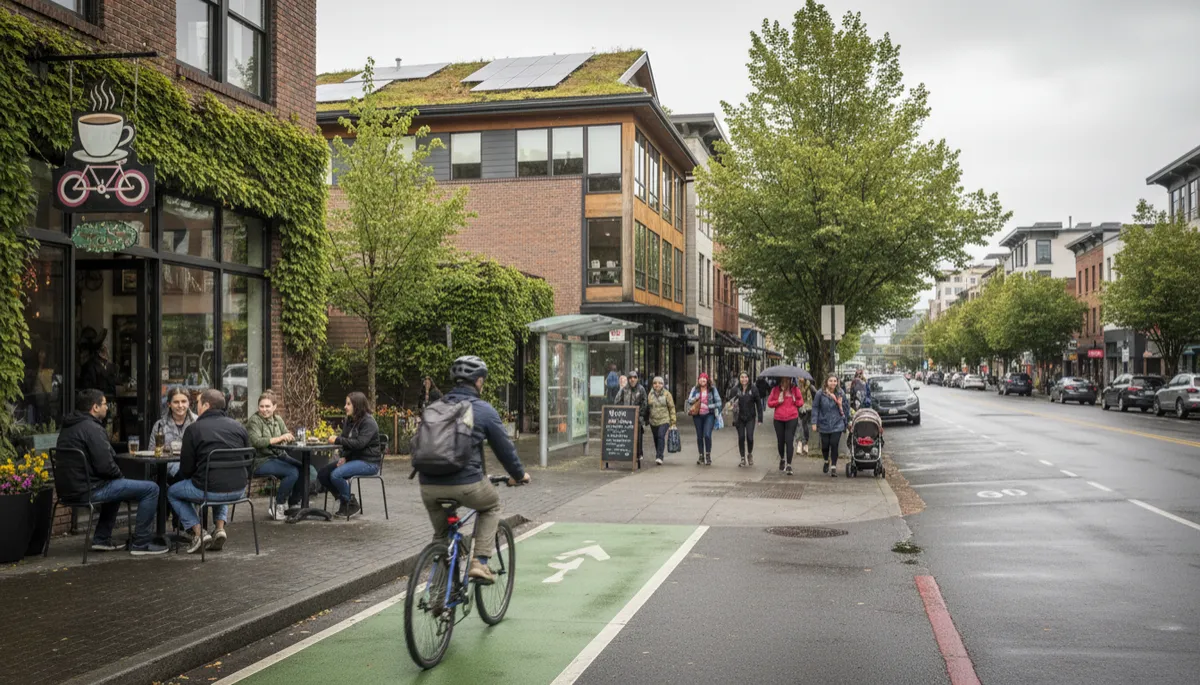
Walkable neighborhoods, bikes, and coffee shops define everyday Portland lifestyle.
Cost of Living Portland 2026: What You’ll Really Pay
The biggest question for anyone considering moving to Portland is simple: Can I afford it? The short answer is “yes, if your income matches the city”—but Portland is no longer a budget alternative to Seattle or San Francisco. Multiple sources put the overall cost of living in Portland about 12% above the national average, largely because of housing and taxes.
Housing and Rent
As of mid‑2026, rent averages around $1,699 per month across all property types. More specifically:
Studios typically run $1,250–$1,400 per month.
A 1‑bedroom averages roughly $1,400–$1,800, with city‑center units closer to the top of that range or above.
3‑bedroom apartments are commonly in the $2,100–$2,700 range.
For buyers, Zillow pegs the typical Portland home value at around $540,000–$550,000, with total monthly homeownership costs (mortgage, taxes, insurance, maintenance) estimated near $3,500+. Home values have softened slightly—down about 0.4% year‑over‑year—which may open doors for some buyers, but ownership is still far from cheap.
Everyday Expenses and Utilities
When you factor in rent, utilities, food, transportation, and basic leisure, most estimates suggest:
A single person needs roughly $2,800–$3,500 per month to live comfortably (excluding aggressive savings).
A family of four generally lands in the $6,000–$6,500 per month range.
Recent hikes in utilities and local taxes add roughly $125 per month to the typical household budget, according to local reporting. That may not sound huge, but combined with rising rents, it’s noticeable—especially if you’re coming from a lower‑cost region.
💡 Pro Tip: Before committing to moving to Portland, build a mock monthly budget using current rent estimates for your ideal neighborhood and add at least 10–15% as a buffer for taxes, utilities, and lifestyle spending.
Portland Pros and Cons: A Balanced Look for Relocation Decisions
The Pros of Moving to Portland
Outstanding access to nature: Within 90 minutes you have mountains, ocean, waterfalls, and wine country. For hikers, cyclists, skiers, and campers, this is hard to beat and often tops every Portland living review from outdoor lovers.
Vibrant food, coffee, and craft beer culture: From food carts to James Beard–level restaurants, Portland punches far above its weight. If you love trying new spots, you will not be bored here.
Progressive, sustainability‑minded values: The city is known for its environmental consciousness, bike‑friendliness, and strong support for local, organic, and small‑scale producers. If that matches your values, you’ll likely feel at home quickly.
Creative and cultural scene: Galleries, music venues, theaters, and festivals are woven into city life. Even as downtown rebuilds, neighborhood‑level arts and culture remain strong.
Livable scale and transit: Portland feels like a big small town more than a sprawling metropolis. Many areas are walkable or bikeable, and public transit is decent by U.S. standards, especially if you live relatively central.
The Cons of Moving to Portland
High and rising cost of living: As outlined above, the cost of living in Portland is significantly above the national average, especially for housing. If your income doesn’t scale with that, financial stress can overshadow the lifestyle perks.
Long, gray, wet winters: Portland’s rainy season can feel endless, with months of overcast skies and drizzle. If you’re sensitive to lack of sunlight, you’ll want to plan for strategies like light therapy, travel breaks, or embracing cozy indoor hobbies.
Homelessness and urban challenges: Like many West Coast cities, Portland continues to grapple with homelessness and visible poverty. The city is investing in solutions and cleaner streets, but you will still encounter encampments and social services activity, especially in central areas.
Traffic and infrastructure strain: While not Los Angeles‑level, traffic can be frustrating at peak times, and some roads and transit lines feel stretched by growth. Choosing your neighborhood and commute carefully is key.
Competitive job market in certain fields: There are strong sectors—tech, healthcare, creative services, and green industries—but competition can be stiff. Remote workers often have an easier time making the math work than those relying solely on local wages.
Portland Relocation Tips: How to Decide (and How to Land Well)
1. Match Your Income to Your Ideal Neighborhood
Portland is a city of micro‑neighborhoods. Trendier, inner‑eastside areas and close‑in westside neighborhoods command higher rents and home prices but offer the richest Portland lifestyle: walkability, transit, cafes, and quick access to parks. If your income is tight, look at outer eastside or nearby suburbs connected by transit, and be realistic about commute time and car needs.
2. Test‑Drive the Weather and Vibe First
If you can, visit in late fall or winter, not just in perfect July sunshine. Spend time downtown, in a few residential neighborhoods, and along transit lines. A short‑term rental or month‑long stay can give you a far more accurate Portland living review than a quick summer weekend.
3. Plan for Community and Mental Health
Portland can be incredibly welcoming, but like any city, it takes effort to build a circle. Join hiking groups, volunteer, attend neighborhood events, or plug into coworking spaces if you’re remote. With the city’s strong focus on mental health and wellness, you’ll find plenty of resources—from therapists to support groups—if you need them, but proactive community‑building makes relocation smoother.
Final Verdict: Is Moving to Portland Right for You This Year?
Weighing all the Portland pros and cons, the city in 2026 is best suited to people who:
Have or can secure an income that comfortably covers a cost of living about 12% above the national average.
Prioritize access to nature, progressive values, and a strong local food and culture scene over low prices and endless sunshine.
Are comfortable living in a city that’s still working through challenges around homelessness, public safety, and urban renewal—but is actively investing in improvements.
If that sounds like you, moving to Portland this year can be a deeply rewarding choice. You’ll gain a lifestyle centered on connection—to nature, to local businesses, and to a community that takes wellness and civic life seriously. If, however, your top priorities are low housing costs, sun‑drenched winters, or a flawlessly polished downtown, Portland relocation may not be the ideal move right now.
Ultimately, the best Portland living review is the one you create yourself. Run the numbers, visit in the off‑season, walk the neighborhoods you’re considering, and talk to locals. With clear eyes about the cost of living in Portland and realistic expectations about its strengths and struggles, you’ll be able to decide confidently whether this is the right city for your next chapter.